
Mindfulness meditation can be thought of as two sides of one coin. One side is mindfulness - the daily practice; are you being mindful of eating, walking, breathing and so on...? And the other side is meditation, which is being present, in stillness.
It is a practice that focuses on being fully present moment-to-moment through a non-judgemental awareness of thoughts, feelings and bodily sensations. It involves intentionally paying attention to the present moment with openness and curiosity.
The practice originates from ancient Buddhist traditions in India and other Eastern cultures.
It’s a practice that encourages you to be present in your own lives.
Practicing mindfulness meditation can allow you to experience yourself directly, as you are, warts and all. Sometimes strong emotions can be evoked during a meditation, therefore, practicing mindfulness meditation in a safe space with a qualified therapist will give you confidence that you will be held and listened to.
The practice consists of bringing your attention to something immediate such as your breath or bodily sensations, while noticing when your mind wanders into thinking and into thoughts.
When we begin to notice that we’re having a thought, the task, then, is to gently bring your attention back to the immediate source – the breath...sounds, bodily sensations.
It’s important to understand that we cannot stop thoughts or thinking, but we can learn how to observe them.
We can do this by noticing that we’ve had a thought and labelling it as a thought, thereby reducing the impulse to attached ourselves to that thought.
If we can start to pay attention to how we attach stories to the thoughts, we can begin to reduce over-thinking and over-analysing. Unfortunately, the stories we tell ourselves are often negative and self-critical. Analysing thoughts can sometimes make us judge ourselves harshly and our inner critic - the voice inside our head, which can often be automatic and negative, will become louder and more repetitive - I’m too busy, I’m stupid, I should’ve done…which can impact our mental health in a really unhelpful way.
So, mindfulness meditation is about bringing our attention back into the present moment and becoming aware when we get distracted by the narratives that we tell ourselves. And the judgements that we put on ourselves.
Practicing mindfulness meditation isn’t meant to stop thoughts or feelings, but to observe them as they arise and pass.
What isn’t Mindfulness Meditation?
Practicing mindfulness meditation isn’t meant to be goal orientated, and we don’t put expectations on ourselves or the practice. Nor is it a quick fix, as in one session will not fix whatever it is your maybe struggling with.
The practice can’t be rushed, and it shouldn’t be difficult. Mindfulness meditation isn’t exclusive, it’s for everyone. And it’s not just for yourself; practicing mindfulness meditation can have a healthy ripple effect with those around you.
The metaphor of the mountain, representing stability, stillness, and unwavering groundedness is often used to symbolise mindfulness meditation.

What are the benefits of practicing mindfulness meditation?
When we mediate, the intention is to only be present, however, the benefits of being present have the potential to make your nervous system feel calmer or relaxed. Because the practice encourages a non-judgmental observation of thoughts and feelings, it can promote acceptance of emotions rather than avoidance.
Meditating can provide a sense of waking up from automatic thoughts that we have, such as negative thinking, over-thinking, self-criticism and self-judgement. Daily practice can slow these thoughts down, so we’re able to respond authentically rather than reacting automatically to something.
Meditating can also provide a deeper sense of clarity about our inner experience, or to put it another way we can begin to relate to ourselves in more compassionate and helpful ways.
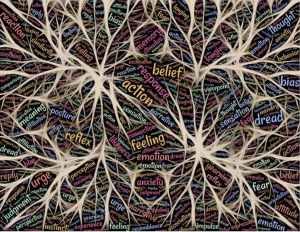
Our brain functioning can also be improved through mindfulness meditation. Research suggests that daily practice can build new neural pathways, which are a network of neurons that connect with different parts of the nervous system. Neural pathways are not fixed; they are constantly changing, forming, and breaking down in response to experience and learning, which means we can create new habits and break old habits.
Mindfulness mediation can also increase activity in the pre-frontal cortex – which is linked to logic and reasoning, and can help with how we process information and execute tasks.
In terms of mental health and well-being, mindfulness mediation can reduce activity in the amygdala, which is the brain’s alarm system or smoke detector, if you like. The amygdala gets switched on, or hijacked when we’re under threat, when we sense danger, or when we’re stressed, worried or anxious. Therfore, if a person has lived through many negative experiences in life, the amygdala often never switches off, which can give rise to more persistent mental health conditions.
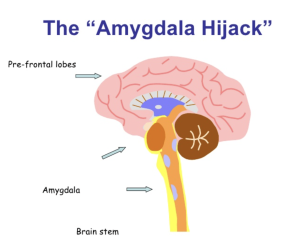
For people with anxiety disorders, for example, regulating that part of the brain through mediation and mindfulness, can reduce stress and anxiety, and can improve attention and focus in daily routines as well. So, by practicing mindfulness meditation reactions to stressful situations can be lowered and we can start responding instead.
As a mindfulness meditation practitioner, I will be offering one-to-one mindfulness meditation sessions in the near future.
Sources:
Dr Lucy Clark (Online Presentation, The Wee Retreat 21st November 2025)
https://www.greatmindsclinic.co.uk/what-are-neural-pathways/
https://phyllismillerswartz.com/2018/07/25/hijacked-by-the-amygdala/